

⚠️ Affiliate Disclosure: This post may contain Amazon affiliate links. If you purchase through these links, I earn a small commission at no extra cost to you. Your support helps me to keep creating interesting and informative content. All opinions expressed here are my own.
Introduction to Large Jigsaw Puzzles
Large jigsaw puzzles are more than just a pastime—they’re an exercise in problem-solving and relaxation. They can be deeply satisfying to complete, but they also come with their own set of challenges, including limited space, mental fatigue, and the sheer number of pieces. This guide will walk you through the essential steps and techniques for conquering any large puzzle.

Choosing the Right Large Puzzle for You
Selecting the right puzzle is the first step to success. Consider these factors before starting:
• Skill Level: Start with a piece count that matches your experience level. A 1000-piece puzzle is a good starting point for beginners, while experienced puzzlers might enjoy a 3000+ piece challenge.
• Theme and Design: Choose a puzzle with clear patterns, distinct sections, or vibrant colors. Complex gradients (like large sections of blue sky or black water) can be frustrating.
• Material: Wooden puzzles are durable but more expensive, while cardboard puzzles are affordable and widely available.
• Brand Recommendations: Popular brands like Ravensburger, Buffalo Games, and Clementoni are known for their quality and durability.
Setting Up Your Puzzle Workspace
Creating the right environment is crucial for a fulfilling puzzle-solving experience.
• Surface: Use a puzzle mat, a dedicated puzzle table, or a large flat surface that can accommodate the finished size of the puzzle (which is usually listed on the box).
• Lighting: Good lighting reduces eye strain. Natural light is ideal, but adjustable desk lamps or overhead lights work well too.
• Comfort: Use an ergonomic chair to avoid back and neck strain during long sessions.
• Tools: Puzzle sorting trays, a magnifying glass, and storage boards or roll-up mats can make a big difference, especially for puzzles over 1000 pieces.
I use a magnifying lamp when natural light isn’t enough. It’s handy for images with darker tones that can be tricksy to see. You can find the lamp I use on amazon here.


Sorting Your Puzzle Pieces
Sorting is one of the most important steps in solving a large puzzle efficiently. Turn all pieces image-side up first, and then begin separating them.
• Edge Pieces First: Separate all the edge pieces and assemble the border.
• Focus on Key Features: Identify standout areas in the image, like faces, text, architecture, or bright, distinct patterns.
• Color and Pattern Groups: Group pieces by similar colors, patterns, or textures. Use sorting trays, boxes, or small containers to keep groups organized.
• Shape Sorting (Advanced): For large areas of monochromatic color (like sky or water), sorting pieces by their physical shape (e.g., pieces with two tabs opposite each other, pieces with three tabs) can be a powerful final tactic.
I use these trays when I want to sort by color. They come in several sizes which you can find on Amazon.


When sorting by color doesn’t make sense or I feel like “rummaging” I use anything I can find!


Building the Puzzle Framework
Starting with the edges provides structure and focus.
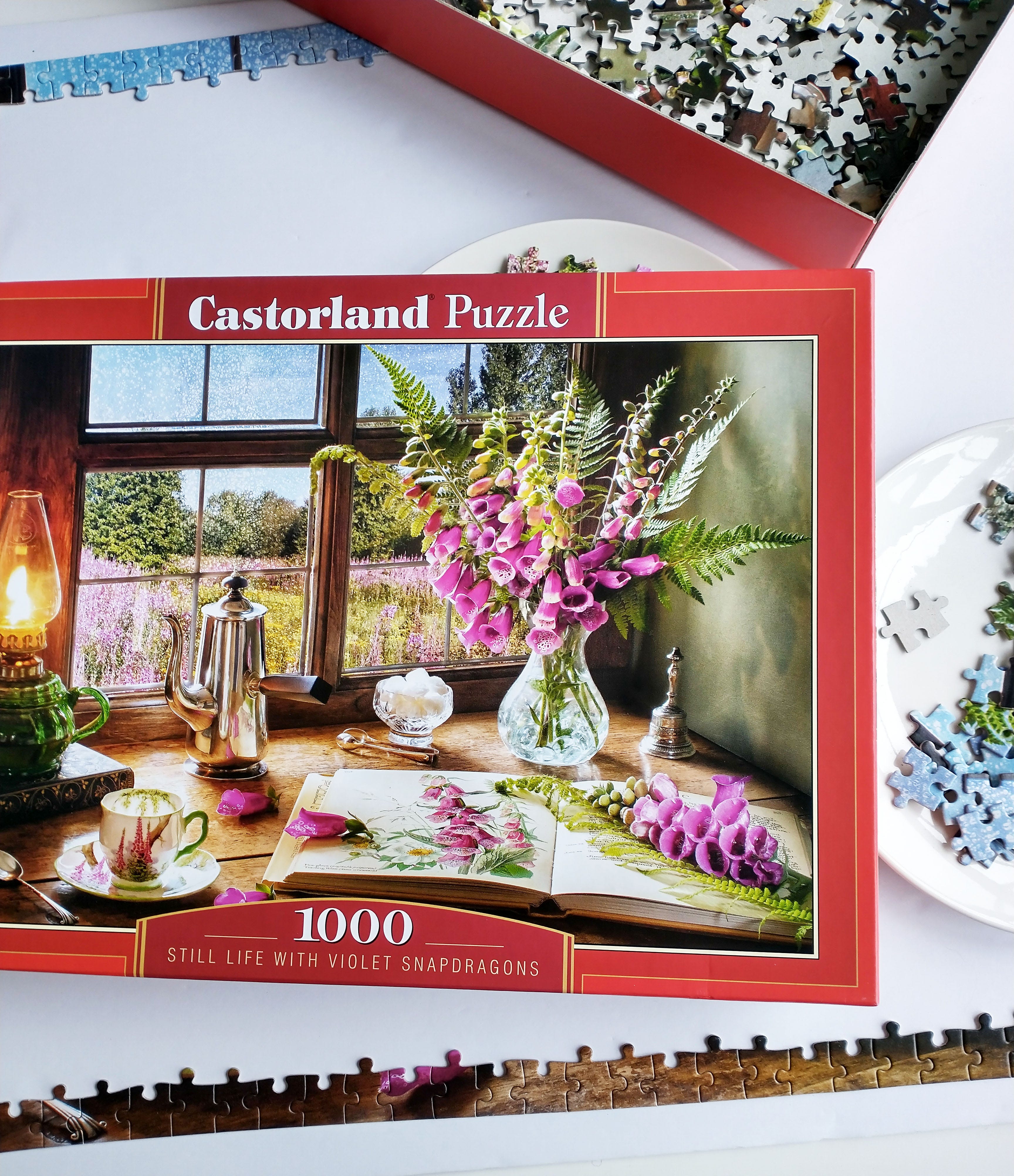
• Begin with the Border: Assemble the border pieces to create the puzzle’s frame. Don’t worry if you can’t find every edge piece; they will emerge as you work.
• Identify Anchor Points: Look for unique colors or bold patterns that stand out on the image and serve as clear starting points.
• Work in Sections: Instead of jumping between different areas, work on one distinct section at a time. Once a small, recognizable section is complete, you can slide it into its general area within the border.
•Avoid Scattering: Resist the urge to scatter pieces across too large an area, which can make the process feel overwhelming.
Techniques for Faster Assembly
Even experienced puzzlers benefit from these efficiency tips.
• The Sorting Glance: Quickly scan your sorted piles for obvious matches before deeper searching for a specific piece.
• Avoid Fatigue: Take regular breaks (short 5-10 minute breaks every hour) to stay sharp and prevent frustration. Return with fresh eyes.
• Focused Sessions: Work in focused 30–60 minute blocks instead of long, tiring stretches.
• Perspective Change: If you get stuck, try moving to another side of the table or turning the puzzle area 180 degrees to gain a fresh perspective.
Overcoming Common Challenges
Every puzzler encounters obstacles—here’s how to overcome them.
• Feeling Stuck: Step away for a short break and return with fresh eyes. Often, the piece you were looking for suddenly becomes obvious.
• Missing Pieces: Always check under tables, chairs, and nearby surfaces, and within the puzzle box itself (sometimes pieces get stuck in the packaging).
• Limited Space: Use foldable puzzle boards or rolling mats for compact storage, allowing you to move the puzzle off the dining table when needed.
•Monochromatic Areas: When faced with large areas of one color, rely on the subtle shade differences and, most importantly, sort by piece shape (knobs, holes, irregular cuts).


Preserving and Displaying Your Completed Puzzle
Finishing a large puzzle is an achievement worth showcasing.
• Puzzle Glue: Use puzzle glue applied across the surface to secure the pieces permanently.
• Framing: Choose a suitable frame that complements your puzzle’s size and design to turn it into wall art.
• Creative Displays: Consider turning completed puzzles into table surfaces or other framed decorations.


Final Thoughts
The key to solving large puzzles is patience, planning, and preparation. By having the right space, proper lighting, and a clear strategy, you can break down a huge challenge into manageable, enjoyable steps. Remember, the journey is as rewarding as the final image.
🧩 Ready to hang a work of art? Check out my reviews to pick your next puzzle.