

*Originally published on MyPuzzleDay.com — August 13, 2024*
⚠️ Affiliate Disclosure: This post contains Amazon affiliate links. If you purchase through these links, I earn a small commission at no extra cost to you.
Table of Contents
Puzzle Piece Counts
Impact of Piece Thickness On Size
Typical Puzzle Sizes for Common Piece Counts
Puzzle Piece Size Comparison
Random vs Standard Piece Cuts
The Role of Branding
Brands That Offer Standard Piece Counts for 500 Piece Puzzles
Choosing The Right Size Puzzle
Final Thoughts
Ever start a new puzzle only to realize it won’t fit on your table? (Guilty.) Puzzle sizes can vary a lot between brands and piece counts, so this quick guide helps you plan your space before you dump out the box.


Why Does My 1000 Piece Puzzle Have More Than 1000 Pieces?
While a 1000-piece puzzle is advertised as such, the actual number often varies slightly. This is because puzzle pieces are typically arranged in a grid for aesthetic and production reasons. To ensure the image fits perfectly within the grid, puzzle manufacturers sometimes need to add or subtract a few pieces.
For example, a 1000-piece puzzle might actually contain 1026 pieces to maintain the correct aspect ratio of the image. It’s a small discrepancy, but it’s the reason why the exact piece count isn’t always as advertised.
Check out this video by Stand-Up Maths for more info on puzzle piece count vs the completed size.
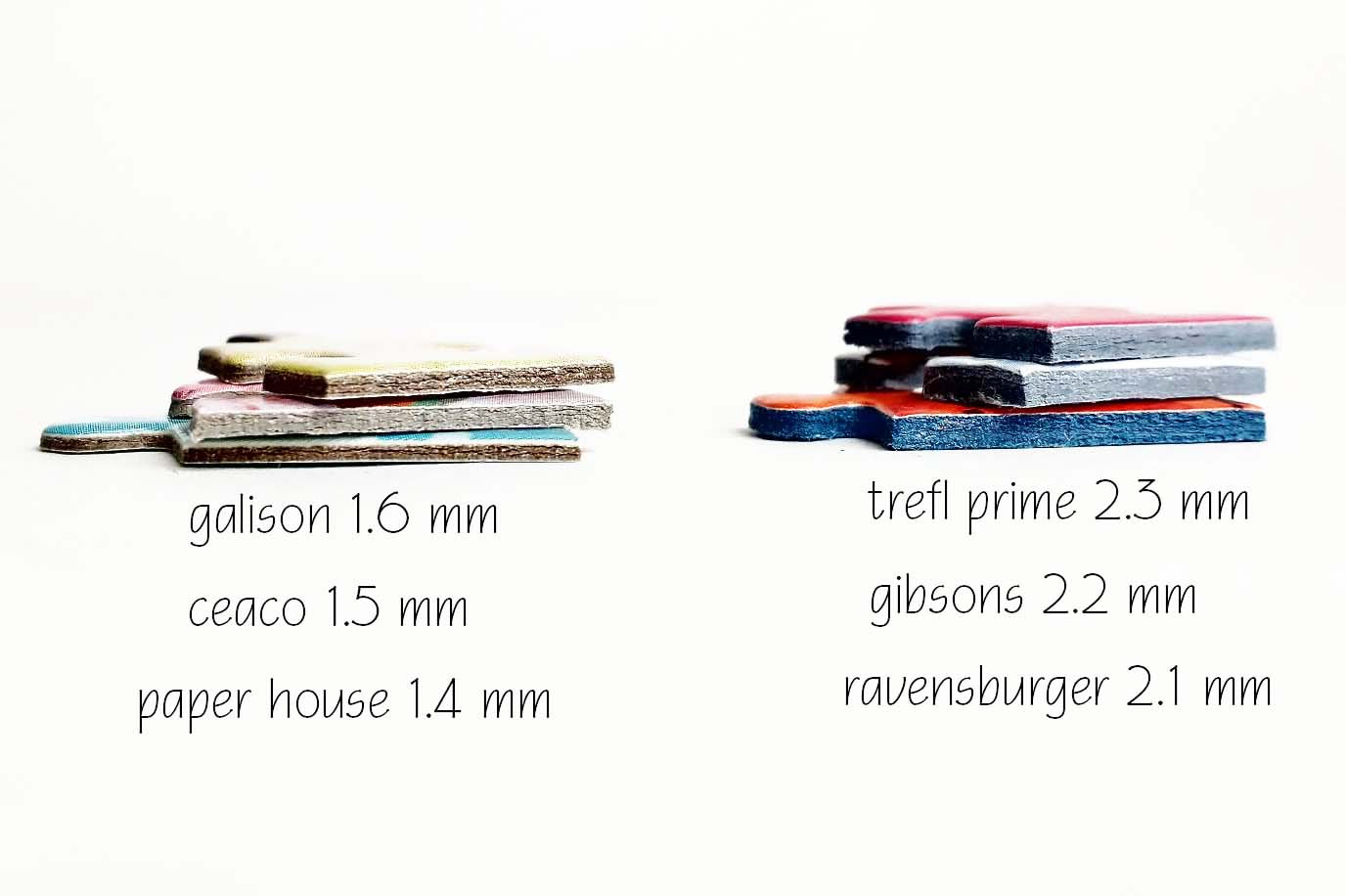
Impact of Puzzle Thickness on Overall Size
While not as significant as piece count or brand, puzzle thickness can subtly influence overall dimensions. A thicker puzzle will have slightly larger dimensions compared to a thinner one, as the pieces occupy more physical space.
Typical Sizes for Common Piece Counts
Please note sizes are approximate.
• 500 pieces: 18″ x 24″ (45cm x 61cm)
• 1000 pieces: 27″ x 20″ (68cm x 50cm)
• 1500 pieces: 30″ x 24″ (76cm x 61cm)
• 2000 pieces: 34″ x 24″ (86cm x 61cm)
• 3000 pieces: 45″ x 32″ (115cm x 82cm)
• 4000 pieces: 52″ x 38 (132cm x 9 cm)
• 5000 pieces: 60″ x 40″ (152cm x 101cm)
• 6000 pieces: 54″ x 38″ (135cm x 96cm)
• 9000 pieces: 76″ x 55″ (19cm x 139cm)
• 18,000 pieces: 43″ x 30″ (109cm x 76cm)
• 24,000 pieces: 66″ x 24″ (167cm x 60cm)
• 33,600 pieces: 224″ x 62″ (568cm x 157cm)
•40,320 pieces: 267″ x 76″ (6m x 192m)
• 60,000 pieces: 348″ x 96″ (9m x 2m)
Puzzle Piece Size Comparison
Puzzle piece size can significantly impact the difficulty and enjoyment of a puzzle.
Smaller pieces generally offer a more challenging experience due to their increased number and intricate shapes. However, they can also be more time-consuming to assemble.
Larger pieces, on the other hand, are often easier to handle and can be more suitable for beginners or those seeking a more relaxed puzzle experience. Ultimately, the ideal piece size depends on personal preference and the desired level of challenge.
Random Cuts
Random cut puzzles can be more difficult to assemble due to the lack of consistent patterns or guides. However, they can also offer a more rewarding experience as solvers must rely more on their intuition and problem-solving skills. This type of puzzle can be particularly appealing to experienced puzzlers seeking a new level of challenge or to those who enjoy the added complexity and creativity that random cut pieces offer.
Standard Grid Cuts
Standard grid cut pieces are often used in puzzles of all sizes, from small 1000-piece puzzles to large 6000-piece puzzles. They are a reliable and popular choice for both beginners and experienced puzzlers.


The Role of Puzzle Brand in Determining Size
While piece count is a primary factor in puzzle size, the puzzle brand also plays a significant role. Different manufacturers have their own standards for piece dimensions and overall puzzle size.
However, this difference is usually minimal and often negligible for most puzzle enthusiasts. It becomes more noticeable in larger puzzles or when precision is critical, such as when framing a completed puzzle.
Brands That Offer Standard-Sized 500-Piece Puzzles
🧩 Anatolian
🧩 Aquarius
🧩 Art & Fable
🧩 Buffalo Games Bonjour!
🧩 Castorland
🧩 Cherry Pazzi
🧩 Clementoni
🧩 Cloudberries
🧩 Educa
🧩 Eurographics
🧩 Falcon/Jumbo
🧩 Heye
🧩 Ravensburger
🧩 Schmidt
🧩 Trefl
Choosing the Right Puzzle Size
When selecting a jigsaw puzzle, considering the desired dimensions is crucial.
Here are some tips:
💡Measure your space: Determine the available area where you plan to assemble the puzzle. This will help you choose a suitable size.
💡Consider puzzle shape: Rectangular puzzles are the most common, but if you have a specific space, a square or panoramic puzzle might be better.
💡Check puzzle dimensions: Always verify the dimensions listed on the puzzle box or the manufacturer’s website.
💡Account for framing: If you plan to frame the completed puzzle, consider adding a few inches to the dimensions for the frame.
💡Think about storage: If you plan to store the puzzle, ensure you have appropriate storage space for its dimensions.
Based on Available Space
➤Limited space: Opt for smaller puzzles, such as 500 or 1000 pieces, to comfortably assemble them in a smaller area.
➤Average space: Puzzles between 1000 and 1500 pieces are suitable for most homes, providing a good balance of size and challenge.
➤Large space: Enjoy the challenge of larger puzzles, such as 2000 pieces or more, if you have ample room to spread out.
Based on Skill Level
➤Beginners: Start with smaller puzzles, around 500 pieces, to build confidence and learn puzzle-solving techniques.
➤Intermediate puzzlers: Challenge yourself with puzzles between 1000 and 1500 pieces. These offer a good balance of complexity and enjoyment.
➤Advanced puzzlers: Tackle puzzles with 1500 pieces or more. These require patience, focus, and advanced puzzle-solving skills.
Does Puzzle Size Affect Difficulty Level?
While puzzle size isn’t the sole determinant of difficulty, it does play a role.
Larger puzzles: Typically perceived as more challenging due to the sheer number of pieces involved. This can make it more overwhelming to start and can require more patience and perseverance to complete.
Smaller puzzles: Generally considered easier as there are fewer pieces to manage. However, some smaller puzzles with intricate designs can still pose a challenge.
It’s important to note that other factors, such as image complexity, piece shape, and personal skill level, also significantly impact puzzle difficulty.
Remember, these are just general guidelines. The best puzzle size ultimately depends on your personal preferences and the specific puzzle design.
💡 Final Thoughts
Understanding jigsaw puzzle dimensions is essential for selecting the perfect puzzle to match your skill level, available space, and personal preferences. By considering factors such as piece count, puzzle shape, and brand, you can make informed decisions and enhance your puzzle-solving experience.
Whether you’re a beginner looking for a relaxing pastime or an experienced puzzler seeking a challenging endeavor, choosing the right puzzle size is the first step to unlocking hours of enjoyment.
For more information - check out my Big List of Puzzle Brands!
☕ If you found this guide helpful, Subscribe to My Puzzle Day so you never miss new puzzle tips, reviews, and brand spotlights.